
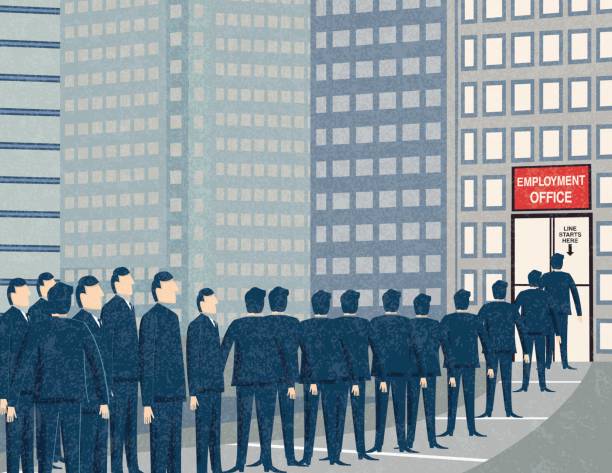
The fear is understandable. The reality is far more encouraging and far more profitable for the businesses willing to look past the headlines.
Few myths generate as much anxiety in the workplace as this one: automate your processes, and you'll inevitably automate your people right out of a job. It's a fear that shows up in boardrooms, break rooms, and one-on-one conversations between managers and employees who suspect their role is on the chopping block.
It's also a myth that, when examined closely, doesn't hold up. Automation isn't designed to replace your staff. It's designed to replace the parts of their job that were never a good use of their talent in the first place.
Where This Fear Comes From
This isn't an irrational fear pulled out of thin air. Decades of industrial automation have, in certain contexts, eliminated specific categories of manual labor. Assembly line robotics replaced repetitive physical tasks. Self-checkout kiosks reduced the need for as many cashiers. These are real historical examples, and they've shaped a cultural narrative that automation equals job loss.
But there's an important distinction between industrial automation replacing physical, repetitive tasks on a production line, and modern business process automation, the kind most small and mid-sized businesses are adopting today. The two operate on fundamentally different principles, and conflating them creates unnecessary fear around tools that are actually built to support employees, not displace them.
What Automation Actually Removes
Modern automation tools target a very specific category of work: repetitive, rules-based, low-judgment tasks that consume time without requiring much human thought. Things like:
- Manually entering the same data into multiple systems
- Sending the same follow-up email over and over
- Sorting incoming requests into the right category or queue
- Copying information from one spreadsheet to another
- Generating routine reports on a recurring schedule
- Answering the same frequently asked questions repeatedly
Notice what's missing from that list: relationship-building, creative problem-solving, strategic decision-making, complex client communication, and the judgment calls that require human context and experience. Automation isn't built to do those things, it's built to clear them off your team's plate so they have more time and energy left for them.
The Real Pattern: Augmentation, Not Replacement
The dominant trend in modern business automation isn't replacement, it's augmentation. Automation acts as a force multiplier, allowing your existing team to accomplish significantly more without working longer hours or hiring additional headcount to handle growth.
Consider a customer service representative who used to spend the first twenty minutes of every call looking up account information across three different systems. With automation pulling that data into one screen automatically, that rep can now spend those twenty minutes actually talking to customers, solving problems, and handling a higher volume of meaningful interactions. The job didn't disappear. It got better and more focused on the parts that require an actual human being.
Or consider a small accounting team drowning in manual data entry every month. Automating that data entry doesn't make the accountants unnecessary, it frees them to do the analysis, advising, and strategic financial planning that actually requires their expertise. The repetitive task was never the valuable part of their job. It was the obstacle standing between them and the valuable part.
What Employees Actually Experience
Organizations that implement automation thoughtfully and with clear communication about why it's being introduced, typically see a different outcome than mass layoffs. They see:
Reduced burnout. Repetitive, monotonous tasks are a leading driver of employee disengagement. Removing them tends to increase job satisfaction, not threaten it.
More meaningful work. When the busywork disappears, what's left is the part of the job that actually requires a human creativity, empathy, judgment, relationship management. Most employees prefer this work.
Capacity for growth, not cuts. As automation creates capacity, businesses often redirect that capacity toward growth initiatives, new products, expanded service offerings, better customer experience, rather than reducing headcount. Growing businesses need their people more, not less.
New skill development. Employees freed from repetitive tasks often take on higher-value responsibilities, expanding their skill sets and increasing their value to the organization over time.
When the Fear Has Some Truth to It
To be fair, there are scenarios where automation does reduce headcount needs which are typically in roles that were almost entirely composed of repetitive, automatable tasks with little room for higher-value work. If 90% of a role's daily responsibilities can be fully automated, that role's structure will likely need to change.
But this is precisely why thoughtful businesses approach automation as an opportunity to redeploy talent rather than eliminate it. Employees whose repetitive tasks get automated can often be retrained or repositioned toward roles focused on customer relationships, process improvement, or strategic projects, work that adds far more value to the business than the task that got automated in the first place.
The businesses that handle this transition poorly are usually the ones that automate without communicating the "why," leaving employees to assume the worst. The businesses that handle it well treat automation as a conversation, not an ambush explaining clearly what's changing, what isn't, and what new opportunities the changes create.
The Bottom Line
Automation was never built to replace the judgment, creativity, and relationship skills that make your team valuable. It was built to eliminate the tasks that were quietly draining their time and energy without using any of those skills at all.
The businesses that embrace this distinction don't lose talent to automation, they free their talent to do the work that actually matters. And in a competitive market, that's not a threat to your team. It's an investment in them.
Automation doesn't ask your team to do less. It asks them to spend their time on the work that was always meant to be theirs.